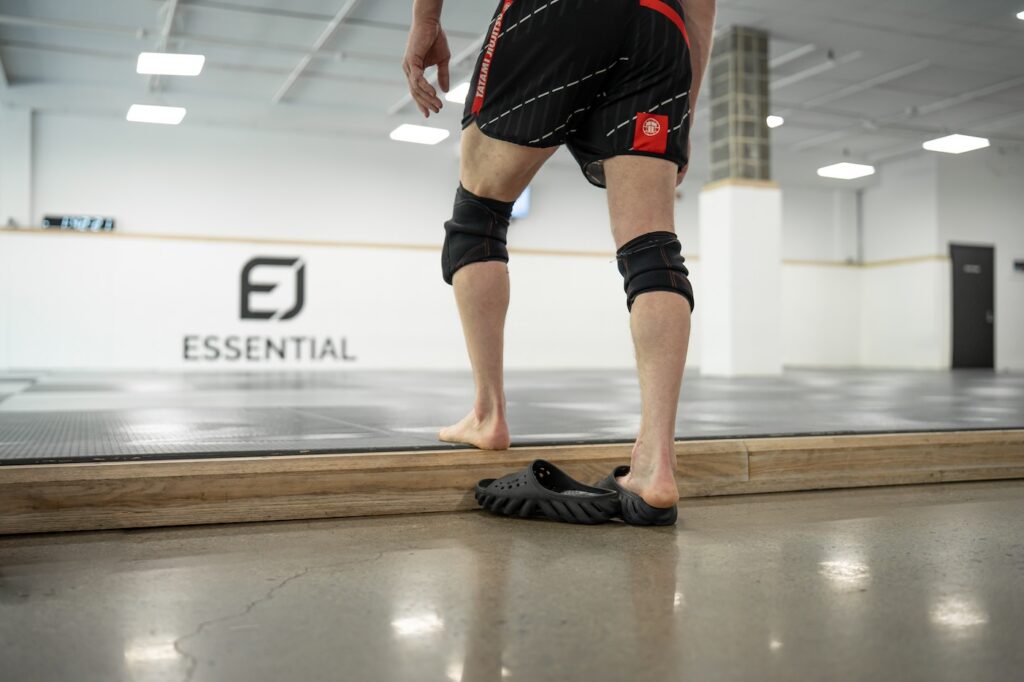
tl;dr – wash yourself, wash your stuff, and stay off the mats if you’re sick. An ounce of prevention is worth a pound of cure!
So you’ve been training for a few months now. You love it. It’s the first thing you think of in the morning, and all day at work you’re telling your friends about how much fun you’re having at jiu jitsu classes.
While at lunch, you run to the bathroom to wash your hands, and notice an itchy spot on your neck in the mirror. Weird: that wasn’t there this morning. It looks like a pimple, or maybe an ingrown hair. You brush it off.
You go train that night and have a great class. Things are finally starting to click! You go home happy and head to sleep.
The next morning, that “little ingrown hair” is now a massive circle, hot and painful to the touch. A quick trip to Urgent Care confirms it: Staph Infection. Thankfully, you caught it early so it’s just a quick round of antibiotics.
Unfortunately, now the infection has spread to everyone you trained with the night before. They’ll pass it to someone, who will then pass it to someone else. Outbreaks like these can continue circulating through an academy for weeks or months if not addressed quickly
Hygiene is one of the most important parts of a close-contact sport like Brazilian Jiu-Jitsu. One person’s poor hygiene can sideline dozens of training partners. All things considered, they’re easy to prevent: but it takes a village to solve the problem.
What are the most common skin infections in jiu jitsu?
Ringworm and Staph Infection.
The two most common skin infections in Brazilian Jiu Jitsu. Both infections (unfortunately) thrive in the BJJ setting: warm, moist environments with regular skin-to-skin contact, and contact with infected surfaces.
What is Ringworm?
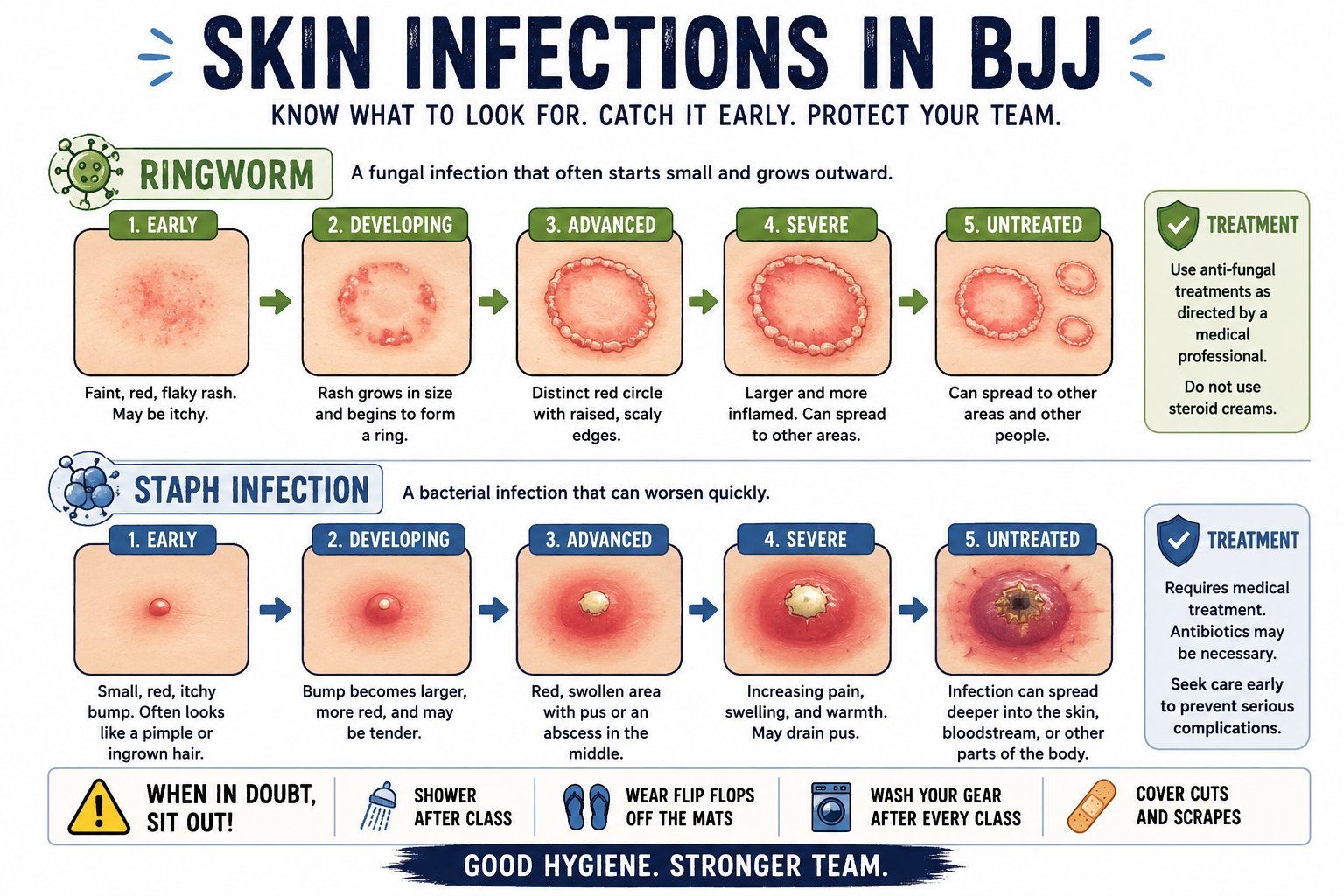
Ringworm is a fungal infection that often starts off as a faint, red, flaky rash that eventually grows into a distinct red circle with raised edges. Ringworm is very difficult to eradicate completely, as treatment via topical ointments often treat the rash itself, all while failing to kill the underlying fungal colony. Other names include Athlete’s Foot and Jock Itch.
What is Staph Infection?
Staph Infection, while less common than ringworm, is nevertheless a common issue because it frequently looks like a pimple or an ingrown hair – at first. It often begins as a small, itchy bump and rapidly progresses (sometimes over the course of a few hours) to a large, red circle with an abscess in the middle, often hot and painful to the touch. The primary concern with staph is progression from a treatable bacterial infection to either:
- MRSA, a medication-resistant infection that can prove fatal, or
- Bacteremia, a blood infection that can lead to sepsis.
Other names for staph include impetigo and cellulitis.
How are Staph and Ringworm treated?
Thankfully, ringworm and staph have straightforward treatment procedures.
Mild cases of ringworm can be treated with anti-fungal creams like Lamisil and Lotrimin Ultra (yes – the same stuff used for Athlete’s Foot!), while more persistent colonies need to be treated by your primary care provider or a dermatologist. They cannot be treated with antibiotics. It’s best to prevent ringworm in the first place, as some infections can take month to eradicate completely! Please be aware that you must use the cream for 4-6 weeks, even after the offending rash has disappeared. If your ringworm is anywhere in your scalp, hairline, or beard, you MUST see a dermatologist for an oral antifungal as shampoos and creams will not clear it up.
NOTE: Per the CDC, do NOT use steroid creams to treat fungal infections like ringworm, as it may worsen the infection.
Staph infections, being bacterial in nature, can be quickly rectified via a course of antibiotics. Doctors will often prescribe ointments like mupirocin in conjunction with oral antibiotics. It is VERY important to see your doctor as soon as possible once symptoms appear, as staph can quickly get out of hand; in June 2025, former Bellator Champion Ben Askren was hospitalized with pneumonia stemming from a staph infection. Askren ultimately spent several weeks on a ventilator and required a double lung transplant.
“How can I prevent getting skin infections in BJJ?“
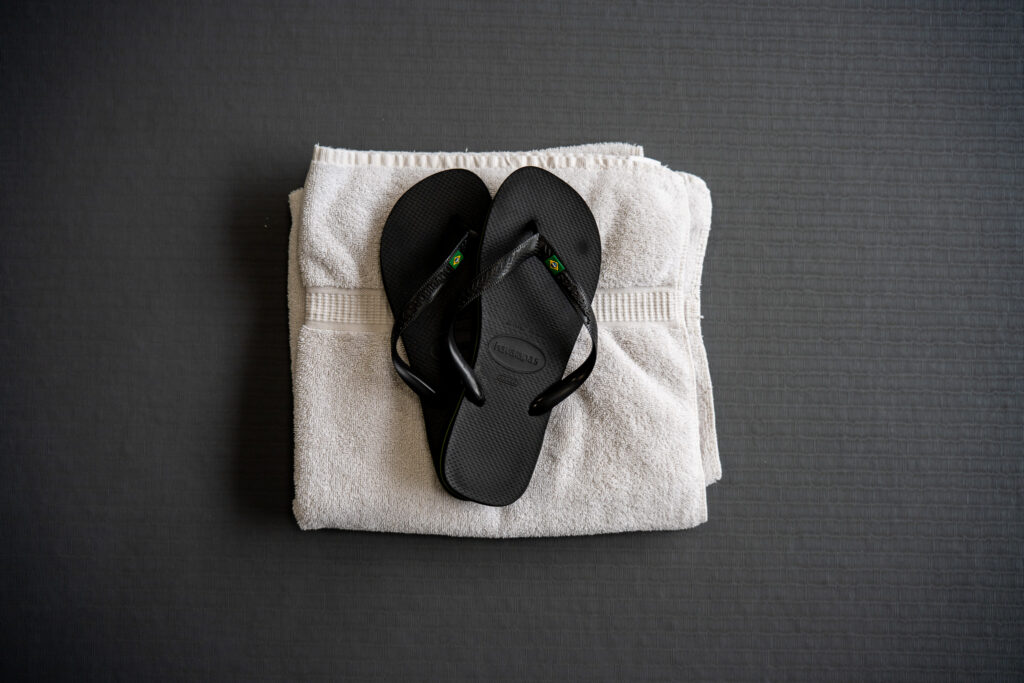
- Wear flip flops at all times when not on the mats. Staph and Ringworm thrive on surfaces, and can easily be tracked onto the mats.
- Trim your nails regularly – long nails cause cuts, which open the skin to infection.
- Do not shower or shave within an hour of training. Showering immediately before training can strip your skin of your body’s natural oils and temporarily weaken the skin barrier, and shaving beforehand can cause irritation that opens you up to skin infections.
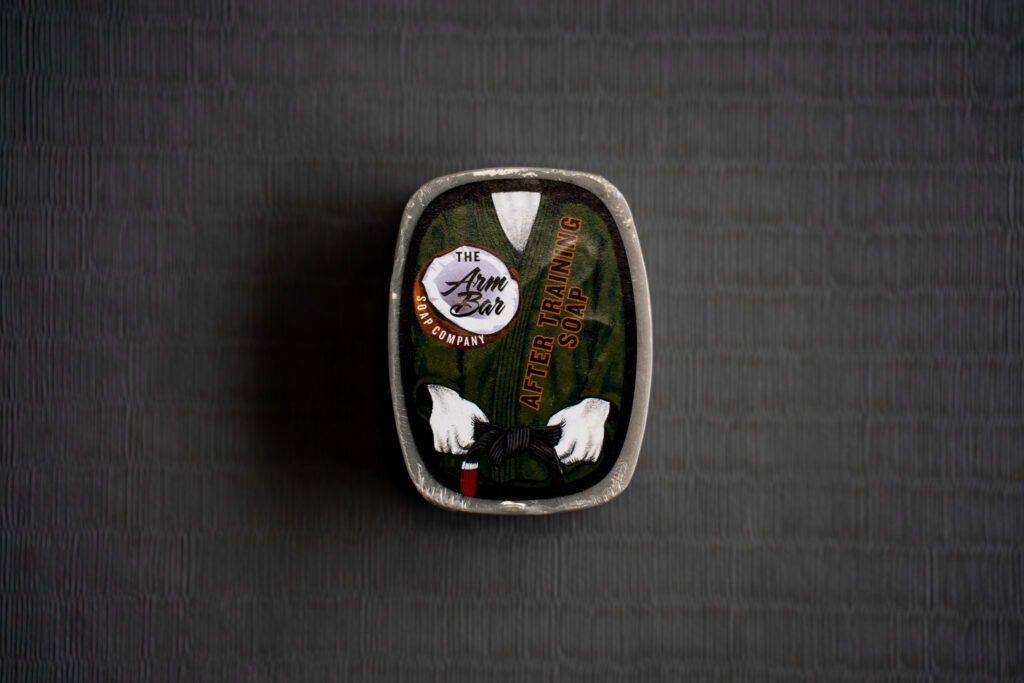
- Shower with tea-tree-oil-based body wash within 30-60 minutes of training – we recommend The Armbar Soap Company! If you cannot shower within 30-60 minutes, change our of your gear and use a product like Defense Soap Body Wipes to tide you over until you can get to a shower – we stock them at the front desk.
- When training NoGi, long-sleeve rash guards and spats are your friends. The less skin exposed, the better! Beginning November 1st, 2026, we will be requiring long sleeve rash guards and spats for all students in our kid’s NoGi program.
- Keep multiple gis and nogi sets in rotation, so each piece of gear gets adequately washed before your next training session.
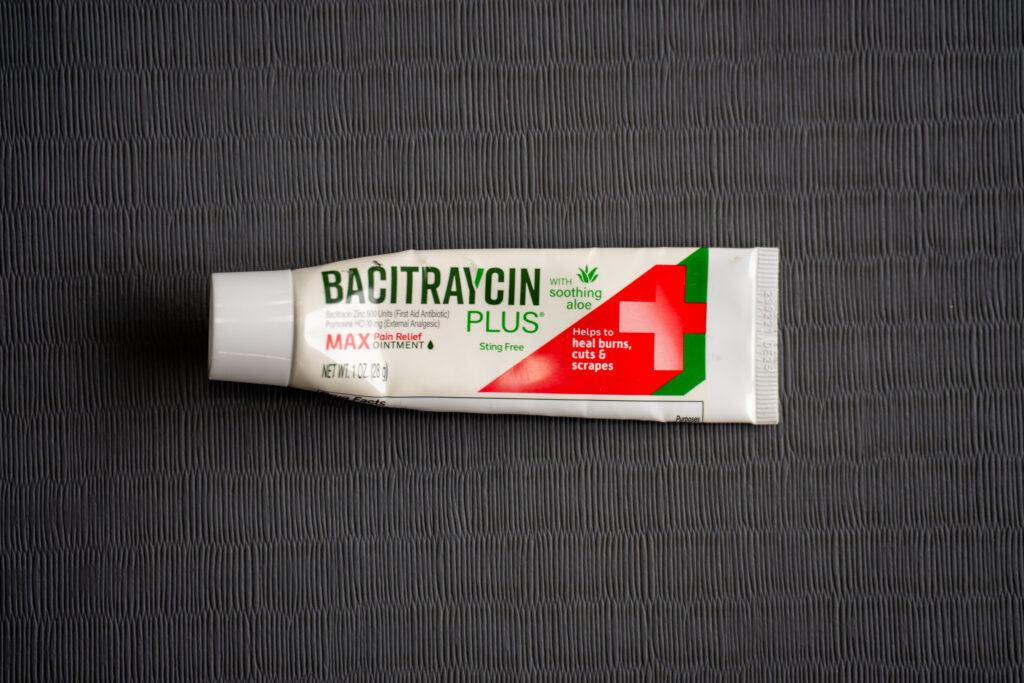
- Treat all scrapes, cuts, and irritations with Neosporin before and after class, even if you’re keeping them covered!

Can I train if I have a skin infection?
Under no circumstances is it acceptable to train if you have an active skin infection. The safest approach is simple: wait for it to clear up entirely before returning to training. Not only is it disrespectful to your teammates, you also risk the skin infection progressing into life-threatening conditions like MRSA and Sepsis.
I have this weird bump on my leg. Can I train if I keep it covered?
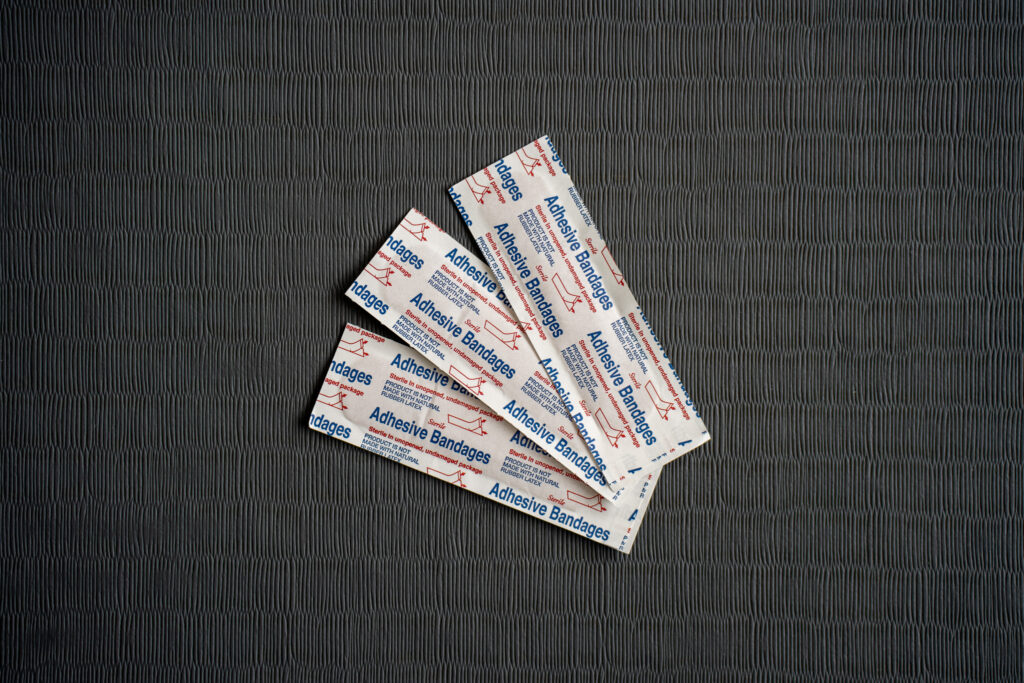
Unfortunately, most skin infections are not contained by bandages once the infection is active. Bandages are moderately effective at preventing infections by covering open cuts or irritations, but once the infection takes hold you must refrain from training until it heals entirely. In fact, skin infections do not always break out in the same place they enter your system – bacteria or fungus may enter your body via a cut on your leg, for example, and break out on your arm or neck.
But I have a competition coming up. Can’t you make an exception?
No.
“It’s just eczema. It’s not contagious.“
We totally understand that some people have pre-existing conditions that may resemble skin infections. We’re happy to accommodate you once a doctor’s note is provided. That said, eczema irritations disrupt the skin barrier in such a way that makes you prone to skin infections, so either keep it covered or wait for your flare-up to go into remission.
“I don’t want to snitch, but should I tell someone if I think someone has a skin infection?“
Absolutely. It’s better to be safe than sorry. Even the most benign-looking infections can be life-threatening if not taken seriously.
“How do I keep my BJJ gear clean?“
The simplest way to keep your gear clean is to wash it after every class, no exceptions. This includes belts, rash guards, shorts, spats, knee braces, undergarments, etc. Do not use bleach, as it can damage the fibers on gis and belts. Drying your gear on high heat can help kill bacteria, so take this into account when sizing your gi as most shrink in the wash. We also encourage wiping down your flip flops with disinfectant wipes after each class. People often forget to wash their gym bag, so be sure to wash it often. You might also consider keeping a few trash bags in your gym bag to store dirty gear in after training.
I’ll say it again: Always wash your BJJ gi, rash guard, belt, and training gear after every class!
Reminder: it’s easy to tell when your gear has not been cleaned. We will ask that you use a rental gi/nogi set should we determine that yours has not been washed appropriately.
Isn’t it the gym’s job to keep the mats clean and prevent infections?
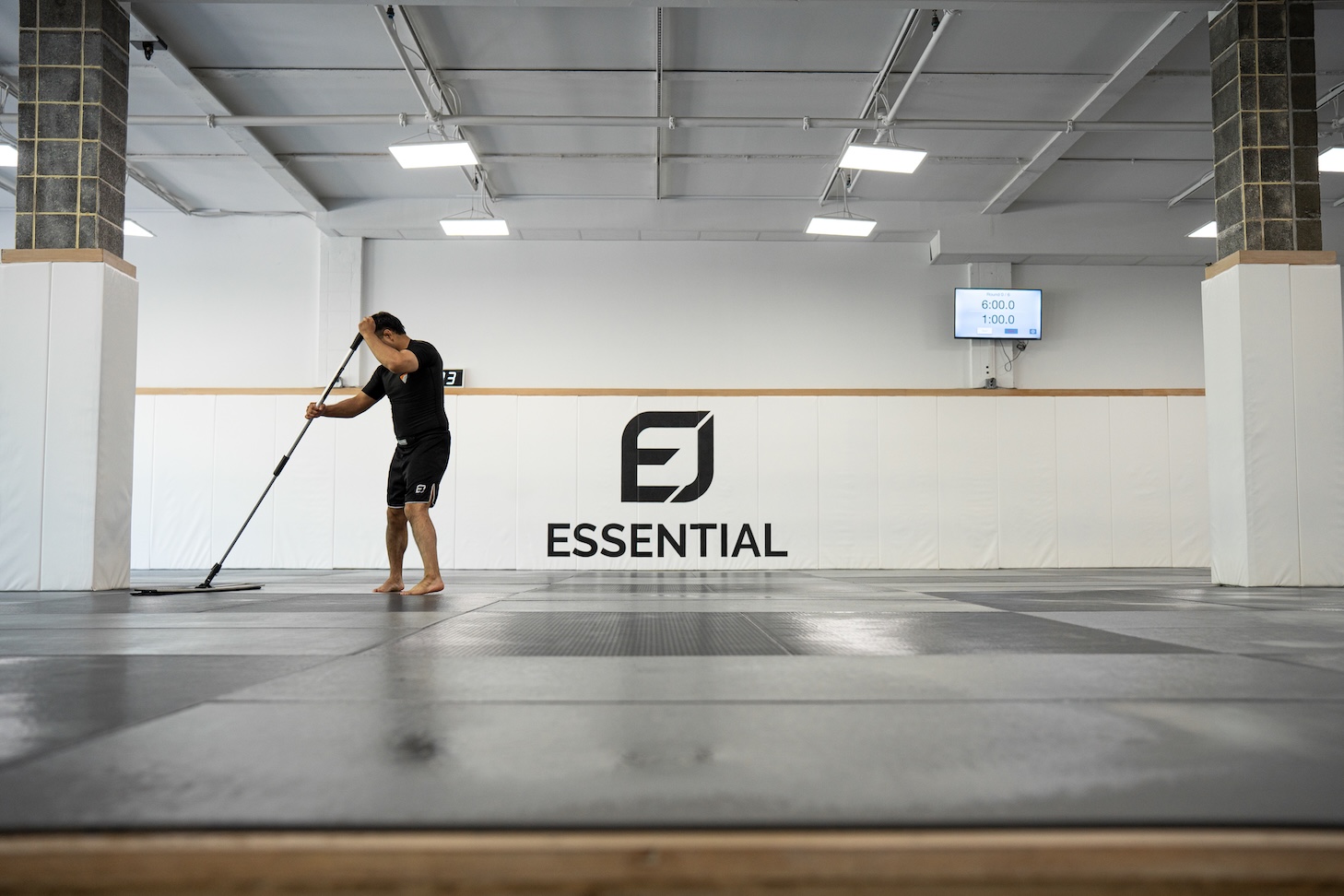
At our jiu jitsu school in White Plains, NY, we do everything in our power to keep the mats clean and safe for everyone who comes to train; the mats are swept, mopped, and disinfected several times a day, and the academy is cleaned each night by a professional cleaning crew. Additionally, the mats are scrubbed and deep cleaned each week, and we stock disinfectant body wash in the showers at the gym.
We recently spoke with a board-certified dermatologist who trains here in our intro program, and he made it clear that skin infections in combat sports are primarily spread from person-to-person, skin-on-skin contact. We can keep the mats as clean as possible, and it wouldn’t have any impact if someone comes to train with an active infection.
Final Thoughts
Good hygiene is part of being a good training partner in Brazilian Jiu Jitsu – it’s the same as not ripping submissions in class, slamming your partner on their head, going 100% when asking for a “flow roll”, etc. Keeping yourself, your gear, and the mats clean protects your teammates, your academy, and your own long-term training.
If you’re ever unsure whether something is contagious, sit out and get checked by a medical professional. Missing a few classes is far better than spreading an infection through the academy.
** Medical Disclaimer: we are not medical professionals, nor do we claim to be. The information in this article is intended for general educational and informational purposes only and is not medical advice. Always consult a qualified healthcare professional regarding any skin irritation, rash, infection, or other medical concern. Do not attempt to self-diagnose staph infection, ringworm, MRSA, or other contagious conditions based solely on internet research or photographs. If you suspect you may have a skin infection, refrain from training and seek evaluation from a licensed medical provider as soon as possible. Recommendations regarding hygiene, cleaning products, and preventative practices are based on common practices within the Brazilian Jiu Jitsu community and should not replace professional medical guidance. **

Leave a Reply